Private gardens / Ukraine

Gardens planned around soil, water and the twelve months that follow.

We read drainage, aspect and shade hours on site before a single line is drawn, so the planting holds through Polissia clay, Forest-Steppe frost and Steppe drought.

See how the assessment works
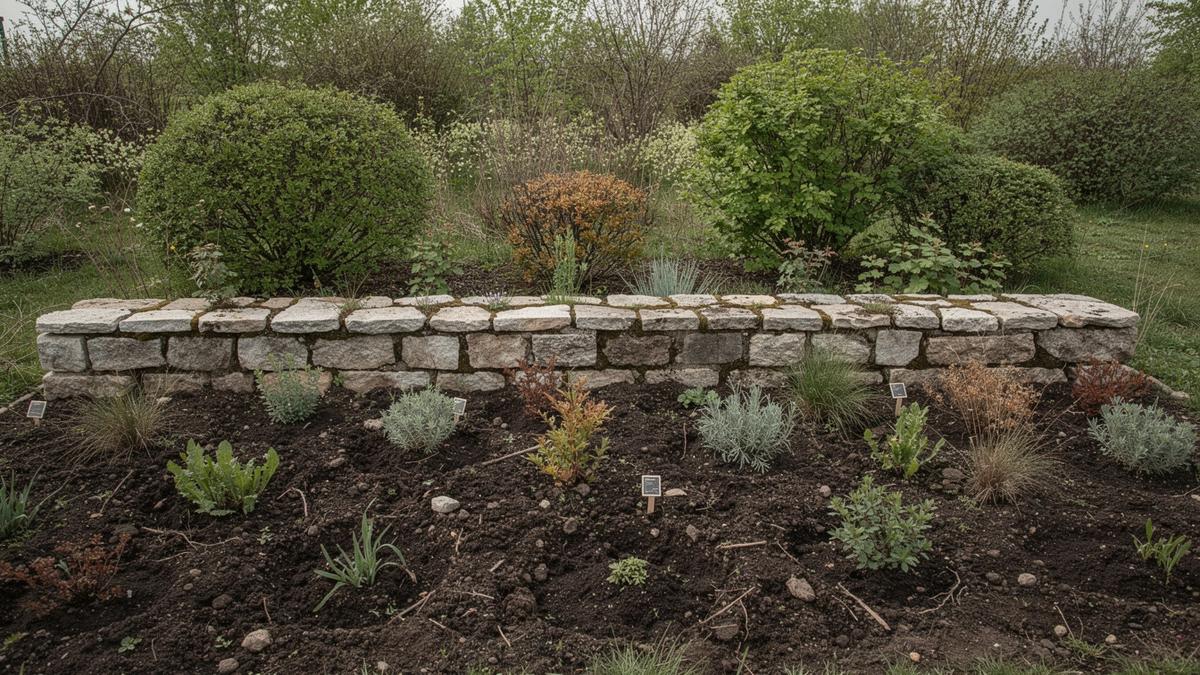
Private garden near Kyiv with clipped shrubs and a new mixed planting border along a stone terrace
Kyiv oblast, Forest-Steppe belt. South-west aspect, clay loam over compacted subsoil. Border rebuilt in two layers after drainage correction.

02 / Field notes

Four constraints decide what survives here

Hardiness, drainage, sun and wind are read on site before a single plant is specified. Two plots in the same village can answer them differently, and the planting plan follows the reading rather than a catalogue.

Readings are taken during the free first visit, with no deposit and no purchase requirement. See how the assessment runs or request a site assessment.

Field note 03

Four planting layers, one seasonal key

Canopy, shrub, perennial and groundcover are specified as one vertical structure, calibrated to the site's aspect, soil depth and winter drainage.

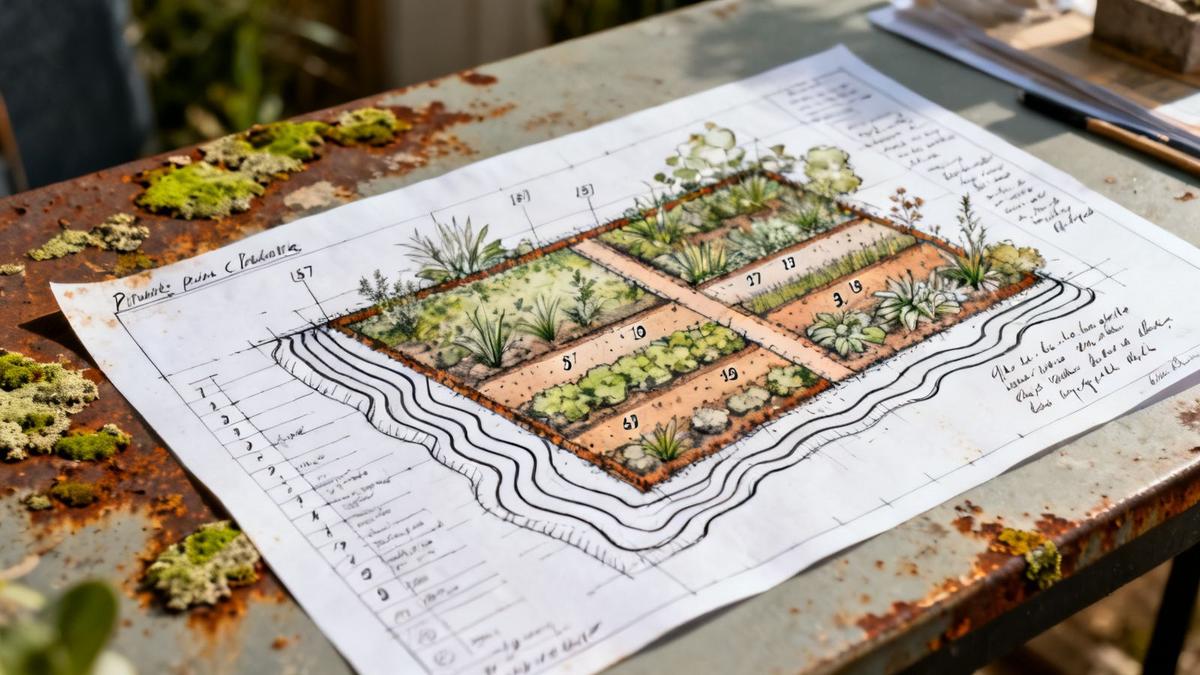
Annotated planting plan showing canopy, shrub, perennial and groundcover layers of a private garden in the Kyiv region
Kyiv region, Forest-Steppe belt. Heavy clay loam over compacted subsoil, south-west aspect, 5.5 shade hours in July, roof-runoff retention bed at the low corner.

Seasonal interest key: spring, summer, autumn, winter

  1. Canopy

    Acer campestre, Tilia cordata

    Field maple, small-leaved lime

    • Spring
    • Autumn
  2. Shrub

    Cornus mas, Hydrangea arborescens

    Cornelian cherry, smooth hydrangea

    • Spring
    • Summer
  3. Perennial

    Salvia nemorosa, Geranium macrorrhizum

    Woodland sage, bigroot geranium

    • Summer
    • Autumn
  4. Groundcover

    Waldsteinia ternata, Carex flacca

    Barren strawberry, blue sedge

    • Spring
    • Winter

Each layer carries a stock size and an amendment rate. See how the plan moves forward in the assessment and planting process, or request a planting plan.

Field note 04 / Water

Irrigation drawn by hydrozone, not by hose length

The same first visit that reads soil and shade also records water source, static pressure and yield. Zones are then drawn around plant water demand, and surplus winter flow is routed to a retention area instead of the storm drain.

Assessment inputs

  • Source borehole or mains
  • Pressure static, in bar
  • Yield m³ per hour
  • Soil clay, loam, sand
  • Drainage perched water depth
  • Aspect sun hours in July
SourceBorehole, 42 m3.6 m³/h at 2.4 bar static
Controller4-station valve boxRain sensor, seasonal adjust
Zone 1, dripShrub border16 mm dripline, 40 cm spacing
Zone 2, dripPerennial beds6 mm capillary line
Zone 3, microKitchen beds1.2 bar regulator
RetentionGravel swale, 6 m³Winter overflow and roof runoff
Hydrozone concept for a Forest-Steppe plot near Vasylkiv: heavy clay subsoil, perched winter water, south-west aspect. Zone lines follow water demand, not bed width.

Source, pressure and yield are logged on the first visit, which is free. Book a site assessment or compare the service tiers.

Field note 04 / Method

From first walk to planted ground

Four milestones, each closing with a document you keep. The sequence holds; timing shifts with season and site access.

  1. 01

    Site assessment

    Eleven field datapoints recorded on site: soil texture and depth, drainage and perched winter water, aspect, shade hours, wind exposure, existing trees, water source, pressure and yield.

    Deliverable: written site report, photographs, marked-up plan.

  2. 02

    Concept

    Two directional options for structure, circulation and outdoor rooms, each tested against the constraints logged in the report rather than against a style catalogue.

    Deliverable: concept drawings with materials and a budget range in UAH.

  3. 03

    Planting plan

    Species selected for the Polissia, Forest-Steppe or Steppe belt your plot sits in, arranged in canopy, shrub, perennial and groundcover layers with hydrozones drawn in.

    Deliverable: planting plan with quantities, stock sizes and a soil amendment specification.

  4. 04

    Implementation

    Tendering, supervision and irrigation commissioning on site, with the maintenance regime disclosed in writing before handover so the first season is planned, not improvised.

    Deliverable: as-built plan, irrigation schedule, first-season care calendar.

The scoping visit and the initial call are free, with no deposit and no purchase requirement. Book a site assessment

Field note 06

Services and price ranges

Full service breakdown

Four working tiers priced in UAH for private gardens across Polissia, Forest-Steppe and Steppe plots. Each tier names a defined deliverable set, so the scope is legible before anyone visits the site.

  1. 01

    Site assessment and field report

    Eleven datapoints recorded on site: soil texture and depth, drainage, aspect, shade hours, wind, existing trees, water source, pressure and yield.

    ₴4,500 – ₴9,000Estimate only

  2. 02

    Planting plan and planting design

    Canopy, shrub, perennial and groundcover layers with stock sizes, spacing, amendment specification and a seasonal-interest matrix.

    ₴18,000 – ₴45,000Estimate only

  3. 03

    Irrigation and water retention concept

    Hydrozone map, drip line routing, water source and pressure checks, plus a retention area sized for heavy clay and perched winter water.

    ₴12,000 – ₴28,000Estimate only

  4. 04

    Full landscape concept with implementation oversight

    Combines all three tiers, adds phased build scheduling, contractor briefings and site visits through planting, with maintenance disclosed up front.

    ₴55,000 – ₴140,000Estimate only

Estimate only; confirmed after on-site assessment. The scoping visit and the first call are free, with no deposit, no purchase requirement and no obligation to commission work.
07 / Request

Scoping visit and first call are free. No deposit, no purchase requirement, no subscription.

Start with a site assessment, not a plant catalogue

We walk the plot, read the soil texture and depth, check drainage and record aspect, shade hours and wind before a single plant is named. What comes back is a written brief you can build from.